



Explore Gabon
Lorem ipsum dolor sit amet, consectetur adipiscing elit. Nunc lacinia mattis rutrum. Nunc imperdiet tincidunt eleifend.
Lorem ipsum dolor sit amet, consectetur adipiscing elit. Nunc lacinia mattis rutrum. Nunc imperdiet tincidunt eleifend. Lorem ipsum dolor sit amet, consectetur adipiscing elit. Nunc lacinia mattis rutrum. Nunc imperdiet tincidunt eleifend.
{Insert Gabon Fact 1}

{Insert Gabon Fact 2}
{Insert Gabon Fact 3}
{Insert Gabon Fact 4}
{Insert Gabon Fact 5}
Location
Lorem ipsum dolor sit amet, consectetur adipiscing elit. Nunc lacinia mattis rutrum. Nunc imperdiet tincidunt eleifend.
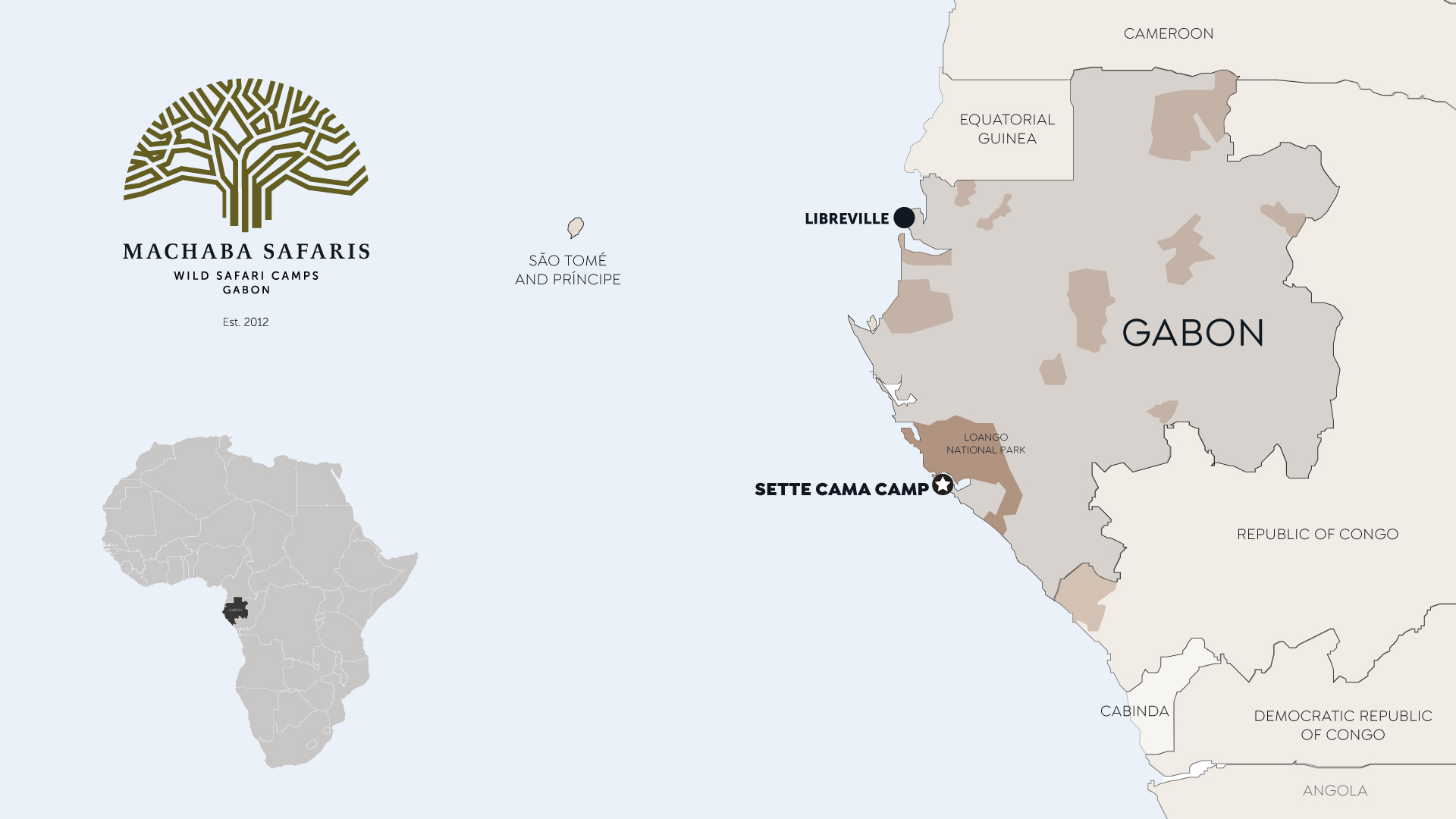
Explore Gabon
Lorem ipsum dolor sit amet, consectetur adipiscing elit. Nunc lacinia mattis rutrum. Nunc imperdiet tincidunt eleifend.


Libreville
Where the journey begins
Libreville is more than a gateway into Gabon. Spend a little time here and the country begins to introduce itself through colourful markets, local flavours, art, architecture and the everyday rhythm of life along the Atlantic coast.
There is value in not rushing through. A guided exploration can move between historical and cultural landmarks, local neighbourhoods and markets, offering a glimpse of Gabon beyond its national parks. Food, craft and contemporary city life add context before the journey turns towards the forest.
The capital is also a useful base from which to reach two very different coastal wildernesses. Across the Gabon Estuary lies Pongara National Park, while Akanda's mangroves and tidal flats unfold north of the city. For travellers interested in Gabon's cultural traditions, a responsibly hosted Bwiti cultural evening can offer another perspective on the country.
Libreville becomes not simply an arrival point, but the first chapter of the journey - a place to understand something of Gabon before disappearing into its wilder landscapes.
- Heritage & culture tours
- Local markets, art & cuisine
- Coastal exploration
- Pongara day trips
- Akanda birding excursions
- Responsibly hosted Bwiti cultural evenings


Pongara National Park
Across the water, the city disappears
Leave Libreville behind and cross the Gabon Estuary to a landscape of mangrove channels, swamp forest, savannah and long Atlantic beaches. The transition happens quickly. City sounds fall away and the waterways begin to set the pace.
Pongara is close enough to Libreville to explore as a day journey, yet it feels distinctly removed from the capital. Moving by boat offers a natural introduction to the park, before exploration continues through its coastal and forest habitats. Forest elephants, buffaloes, chimpanzees, monkeys and duikers occur here, although dense vegetation means encounters are never guaranteed. As elsewhere in Gabon, tracks, calls and signs can be as much a part of the experience as the sighting itself.
The coastline brings another dimension. Pongara is an important nesting area for leatherback turtles and other marine turtle species. During the appropriate season, time on these beaches becomes an opportunity to understand the connection between Gabon's forests, estuaries and Atlantic Ocean.
Pongara works beautifully at the beginning or end of a longer Gabon journey: accessible, varied and wild enough to show just how quickly nature takes over beyond Libreville.
- Boat journeys across the Gabon Estuary
- Mangrove & estuary exploration
- Forest and coastal walks
- Birding
- Wildlife tracking
- Seasonal marine turtle experiences
Akanda National Park
A landscape written by the tides
North of Libreville, Akanda belongs to the water. Mangrove forests meet tidal flats, estuaries, coastal forest and the broad waters of Mondah and Corisco bays, creating one of Gabon's most important coastal ecosystems.
Nothing here is static. With every movement of the tide, the landscape changes - mudflats appear and disappear, feeding grounds open, channels shift and birds move with the water. Exploring Akanda means paying attention to those rhythms rather than following a fixed route.
The park is particularly rewarding for birders. Migratory waterbirds and waders gather across the tidal habitats, while the mangroves support their own complex web of life. Time here is less about pursuing a single headline sighting and more about watching an ecosystem work: tide, mud, mangrove, birdlife and sea continually influencing one another.
Akanda offers an important contrast to Gabon's deeper forest interiors. The horizon opens, the sky feels larger and the relationship between land and ocean becomes the story.
- Specialist birding
- Migratory wader viewing
- Mangrove exploration
- Tidal-flat and estuary excursions
- Boat journeys
- Coastal ecology
Lopé
Where forest meets ancient savannah
In Lopé, two very different Africas meet. Dense Congo Basin rainforest gives way unexpectedly to ancient open savannah, creating a landscape shaped over thousands of years by shifts in climate, vegetation and human movement.
For wildlife travellers, Lopé is closely associated with mandrills. Large troops move through the landscape and, at certain times, can gather in extraordinary numbers. Forest elephants, chimpanzees, western lowland gorillas, monkeys, duikers and rich birdlife form part of the wider ecosystem. Exploring here is about moving between forest and savannah, watching how wildlife uses both.
Yet Lopé's significance reaches far beyond wildlife. The wider Lopé-Okanda landscape is a UNESCO World Heritage Site, recognised for both its ecological and cultural importance. Archaeological evidence in the Ogooué Valley records a remarkably long history of human presence, including ancient settlements, Stone Age and Iron Age remains and rock engravings.
Few places in Gabon bring natural and human history together so clearly. A journey through Lopé is therefore not only about what lives here now, but about understanding a landscape that has been changing - and inhabited - for an extraordinary length of time.
- Mandrill tracking and viewing
- Forest & savannah exploration
- Birding
- Archaeological sites
- Rock engravings & cultural history
North Loango
Into the forest for gorillas
Northern Loango offers a different encounter with Gabon's rainforest. Here, the possibility exists to enter the forest in search of habituated western lowland gorillas, creating one of the country's most sought-after primate experiences.
The trek is part of the story. Following trackers beneath the canopy, movement becomes quieter and more deliberate. Signs, sounds and subtle changes in the forest begin to matter. The aim may be the gorillas, but the hours spent reaching them reveal a much broader world of rainforest ecology and local tracking knowledge.
Beyond the gorillas lies the wider Loango landscape - a remarkable meeting of rainforest, savannah, waterways, wetlands and Atlantic coastline. Forest elephants, buffaloes, chimpanzees and an extraordinary diversity of smaller life inhabit the layers between.
North Loango should not be reduced to a single encounter. The gorillas may provide the reason to come, but the greater experience is entering a living forest and understanding how much is happening beyond what can immediately be seen.
- Habituated western lowland gorilla trekking
- Forest tracking
- Boat exploration
- Savannah & wetland exploration
- Birding
- Wildlife viewing
Sette Cama
Where the forest meets the Atlantic
At Sette Cama, rainforest, the vast Ndogo Lagoon and the Atlantic Ocean converge. It is a landscape without neat boundaries, where forest gives way to lagoon, waterways open towards the sea and wildlife moves freely between them.
Forest elephants and buffaloes may emerge from dense vegetation towards the coast. Hippos inhabit the lagoon and waterways and, on rare occasions, venture towards the Atlantic surf. Western lowland gorillas and chimpanzees live beneath the canopy, but unlike the habituated gorillas of North Loango, the great apes here remain completely wild and unhabituated. Their presence may first be revealed by a call, a nest, a track or feeding signs in the forest.
Days are not dictated by a conventional safari routine. Guides read tides, weather, tracks, calls, fruiting trees and recent wildlife movement before deciding where exploration should lead. Walk rainforest trails, cross the enormous Ndogo Lagoon by boat, kayak quieter waterways or head out after dark when dwarf crocodiles, water chevrotain, owls and other nocturnal species become part of the landscape.
The Atlantic adds another layer. Coastal trails search for signs of forest wildlife and marine turtles, while seasonal turtle monitoring, wildlife monitoring and camera trapping can connect guests more directly with conservation work. Coastal campouts take the experience further, spending a simple night close to the ocean and away from camp.
At Sette Cama, the wild is not rehearsed. There is no checklist to complete and no promise that nature will perform on cue. The reward comes from slowing down enough to read it.
- Rainforest walks & wildlife tracking
- Ndogo Lagoon boat explorations
- Kayaking
- Nocturnal excursions
- Coastal walks
- Birding
- Seasonal turtle monitoring
- Wildlife monitoring & camera trapping
- Coastal campouts
Moukalaba-Doudou National Park
Further into the wild
South of Loango lies one of Gabon's great remaining wildernesses. Moukalaba-Doudou protects a vast and remote landscape of rainforest, open savannah, wetlands, river systems and the forested Doudou Mountains.
The park forms part of the wider Loango-Moukalaba-Doudou conservation landscape and is recognised as important habitat for western lowland gorillas and other great apes. Chimpanzees, forest elephants and a wide range of forest wildlife inhabit an ecosystem that remains remarkably removed from mainstream tourism.
Getting here asks more of the traveller. Infrastructure is limited, access can be demanding and nature sets much of the agenda. Exploration is consequently slower and more expeditionary, with time spent on foot and moving through different habitats rather than following a conventional safari programme.
That is precisely its appeal. Moukalaba-Doudou is for travellers who understand that remoteness comes with uncertainty, and that the reward lies in entering an ecosystem that still operates largely beyond the infrastructure of tourism.
For those prepared to travel slowly, listen carefully and accept what the landscape offers, it is an increasingly rare kind of wilderness.
- Forest walks & tracking
- Great ape and primate-focused exploration
- Savannah exploration
- Birding
- River and wetland landscapes
- Expedition-style wilderness travel
Lambaréné & the Ogooué Delta
Following the river
The Ogooué is one of the great threads running through Gabon, carrying water from the country's interior towards the Atlantic through an immense network of channels, lakes, wetlands and forest.
Lambaréné sits within this watery landscape and offers a distinct change of rhythm from Gabon's coastal wildernesses. Here, the river becomes the road. Journeys by boat move past forested banks, fishing communities and settlements whose lives have long been shaped by the water.
The town also carries a layered human history and is closely associated with Albert Schweitzer and the hospital he established here. Time in Lambaréné can therefore combine river exploration with a deeper look at the historical and cultural stories of the region.
Beyond the town, lakes, wetlands and waterways create opportunities to experience another side of Gabon - slower, quieter and intimately connected to the Ogooué. Further west, the river spreads into its vast delta before reaching the Atlantic, water and forest intertwining until it becomes difficult to tell where one ends and the other begins.
This is a journey less about a single wildlife encounter than about following the river itself and understanding the role it plays in Gabon's landscapes and communities.
- River & lake journeys
- Wetland exploration
- Birding
- Visits to riverside communities
- Local fishing culture
- Historical visits in Lambaréné
Our camps & lodges in Gabon
Lorem ipsum dolor sit amet, consectetur adipiscing elit. Nunc lacinia mattis rutrum. Nunc imperdiet tincidunt eleifend.

Loango National Park
Sette Cama Eco Camp
Sette Cama Eco Camp is built on raised wooden decks surrounded by coastal forest. With 4 meru tents, camp is small and intimate, located on the southern edge of Loango National Park, where the Ndogo Lagoon’s estuary connects rainforest with un-inhabited coastline.
Sette Cama Eco Camp